Why the Same CBD Dose Hits You and Your Friend Totally Differently
You and your gym buddy both picked up the same full-spectrum hemp CBD oil. Same brand, same potency, same dropper size. She takes it before bed and sleeps like she hasn't in years. You take the same amount and feel... basically nothing. So you double the dose. Still not much. What gives?
This isn't a placebo problem, and it's not in your head. It's biology — specifically, the wildly personal way your body breaks down and responds to cannabidiol. Welcome to the CBD metabolism conversation that most product pages don't bother having with you.
Your Liver Is Running the Show
When you swallow a hemp oil tincture or a CBD softgel, it doesn't go straight to your bloodstream. It makes a pit stop in your liver, where a group of enzymes called cytochrome P450 — CYP450 for short — get to work breaking it down. This enzyme family is responsible for metabolizing a huge percentage of the compounds we consume, including most pharmaceuticals and many plant-based supplements.
Here's where things get personal: not everyone's CYP450 system runs at the same speed. Some people are what researchers call "extensive metabolizers" — their enzymes chew through CBD quickly, which means the compound clears their system faster and the effective window is shorter. Others are "poor metabolizers," meaning CBD sticks around longer and builds up more significantly in the bloodstream. And then there's everyone in between.
This isn't a flaw in either type. It's just genetic variation — the same reason one person can drink two cups of coffee at 9 PM and sleep fine, while another is wide awake until 2 AM after a single afternoon latte.
Genetics: The Blueprint You Were Born With
The emerging field of pharmacogenomics — the study of how your genes influence your response to compounds — is starting to shed real light on why CBD works so differently from person to person. Specific gene variants in the CYP2C19 and CYP3A4 pathways appear to play a significant role in how efficiently your body processes cannabinoids.
Consumer genetic testing services have started offering pharmacogenomic panels that can give you a rough sense of whether you're likely a fast or slow metabolizer. It's not CBD-specific, but the enzyme pathways overlap enough to be useful context. If you've ever noticed that you seem to need higher doses of certain medications to feel their effects, or that you're unusually sensitive to others, that's a real data point worth paying attention to.
For now, most of us are working without a genetic roadmap — which means paying close attention to your own experience is the best tool you have.
Body Composition Matters More Than You Think
CBD is fat-soluble. That's a key detail. Unlike water-soluble compounds that move through your system relatively quickly, CBD gets stored in fatty tissue and released gradually over time. This means that body composition — specifically the ratio of fat to lean mass — directly affects how CBD accumulates and distributes in your body.
Someone with a higher percentage of body fat may find that CBD absorbs into tissue more readily, potentially requiring higher doses to maintain meaningful levels in the bloodstream. On the flip side, regular users with higher fat stores may also notice that CBD "lingers" longer between doses because it's being slowly released from those reserves.
This also explains why some people report feeling cumulative effects after using hemp CBD oil consistently for a few weeks — the compound may be building up in fatty tissue and gradually contributing to a more stable baseline.
The Gut Health Connection Nobody Talks About
Your digestive system isn't just a delivery mechanism — it's an active participant in how well CBD works for you. The health of your gut microbiome, the integrity of your intestinal lining, and even how much you've eaten before taking CBD all influence what's called bioavailability: the percentage of the CBD you consume that actually makes it into your bloodstream in active form.
Research has shown that taking CBD with a high-fat meal can significantly increase its bioavailability — some studies suggest by as much as four times compared to taking it on an empty stomach. So if you've been dropping your hemp oil under your tongue first thing in the morning before breakfast and wondering why you're not feeling much, that timing might be worth experimenting with.
Beyond meal timing, chronic gut inflammation, poor gut flora diversity, and conditions like leaky gut syndrome may impair your body's ability to absorb CBD efficiently. If you're someone who already struggles with digestive issues, that context matters when you're trying to figure out your ideal dose.
Practical Ways to Figure Out Where You Fall
You don't need a lab coat to start gathering useful information about your own CBD metabolism. Here are some real-world ways to assess what's going on:
Start low, go slow — and actually track it. Keep a simple journal for your first 30 days with a new hemp CBD product. Note the dose, the time, what you ate beforehand, and what you noticed (or didn't notice) in the hours after. Patterns will emerge.
Pay attention to onset time. If you consistently feel effects within 30–45 minutes, you may be a faster absorber. If it takes 90 minutes or more, your metabolism may be slower — but that also might mean effects last longer for you.
Notice how long effects last. Fast metabolizers often report a shorter effective window. If you feel something but it fades quickly, splitting your daily dose into two smaller servings might serve you better than one large one.
Consider your medication list. If you take any prescription medications that are also processed by CYP450 enzymes — and many common ones are, including certain statins, antidepressants, and blood thinners — your liver may be prioritizing those compounds, which can affect how it handles CBD. This is also a reason to loop in your doctor before adding hemp oil to your routine.
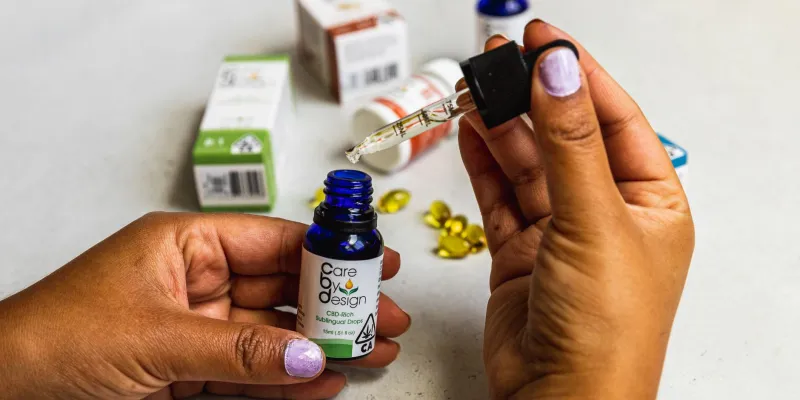
Experiment with delivery method. Sublingual tinctures bypass some of the first-pass liver metabolism that capsules go through. If you've been using softgels without much success, switching to an oil you hold under your tongue for 60–90 seconds before swallowing might give your body a more direct route.
The Bottom Line: Your Dose Is a Moving Target
There's no universal CBD dose because there's no universal human metabolism. The variables at play — your genetics, liver enzyme activity, body composition, gut health, diet, and even the time of day — create a completely individual equation. What works brilliantly for someone else might be totally wrong for you, and that's not failure. That's biology.
At Hemp CBD Oil Plus, we believe that real wellness isn't one-size-fits-all. Understanding the science behind your own metabolism isn't just interesting — it's genuinely useful. The more you know about how your body processes hemp CBD oil, the better equipped you are to find the approach that actually delivers results for you.
Start paying attention. Your biology is already giving you the answers.